

A 12-day showground. One connected visitor wallet.
How Sydney Royal Easter Show ran visitor wallets, self-service top-ups, vendor transactions, settlement reporting, and indoor maps from one Ludo deployment.
- attendance over twelve days
- 900K+
- devices at Sydney Royal Easter Show
- 500+
- tap redemptions over twelve days
- 1M+
- operational uptime
- 99.9%
Context
Sydney Royal Easter Show brings showground scale into a twelve-day operating window: families, vendors, rides, food, support desks, and venue teams moving at once.
Operating problem
The app, wallet, kiosks, terminals, settlement, refunds, maps, and reporting all had to stay aligned while the crowd moved.
Ludo deployment
Ludo connected Pavilion, cards, wristbands, kiosks, terminals, vendor settlement, and venue dashboards on one ledger.
Hard result
500+ devices operated with 99.9% uptime through the twelve-day show window.
Reusable lesson
At showground scale, visitor experience improves when payments, maps, and operations run from the same source of truth.
01 / Context
A 12-day showground creates city-scale pressure.
The Easter Show has the pressure of a city-scale operation compressed into twelve days: families buying credits, ride operators scanning cards, vendors taking payments, support teams fixing edge cases, and venue teams watching the day unfold.
The hard part is not only taking payments. It is keeping every surface aligned while the crowd moves: the app, service counters, self-service kiosks, vendor terminals, settlement, refunds, maps, and reporting.
02 / Ludo deployment
One operating layer across visitors, vendors, and venue teams.
- Visitor app, cards, wristbands, and kiosks shared one wallet layer.
- Vendor terminals applied revenue splits as transactions happened.
- Venue teams saw payments, top-ups, devices, vendors, and visitor activity in one dashboard.
Visitors could load value before they arrived, top up at staffed or self-service points, and spend across rides and vendors. Operators saw live totals instead of waiting for an after-event reconciliation cycle.
03 / Self-service
Top-ups moved out of the queue.
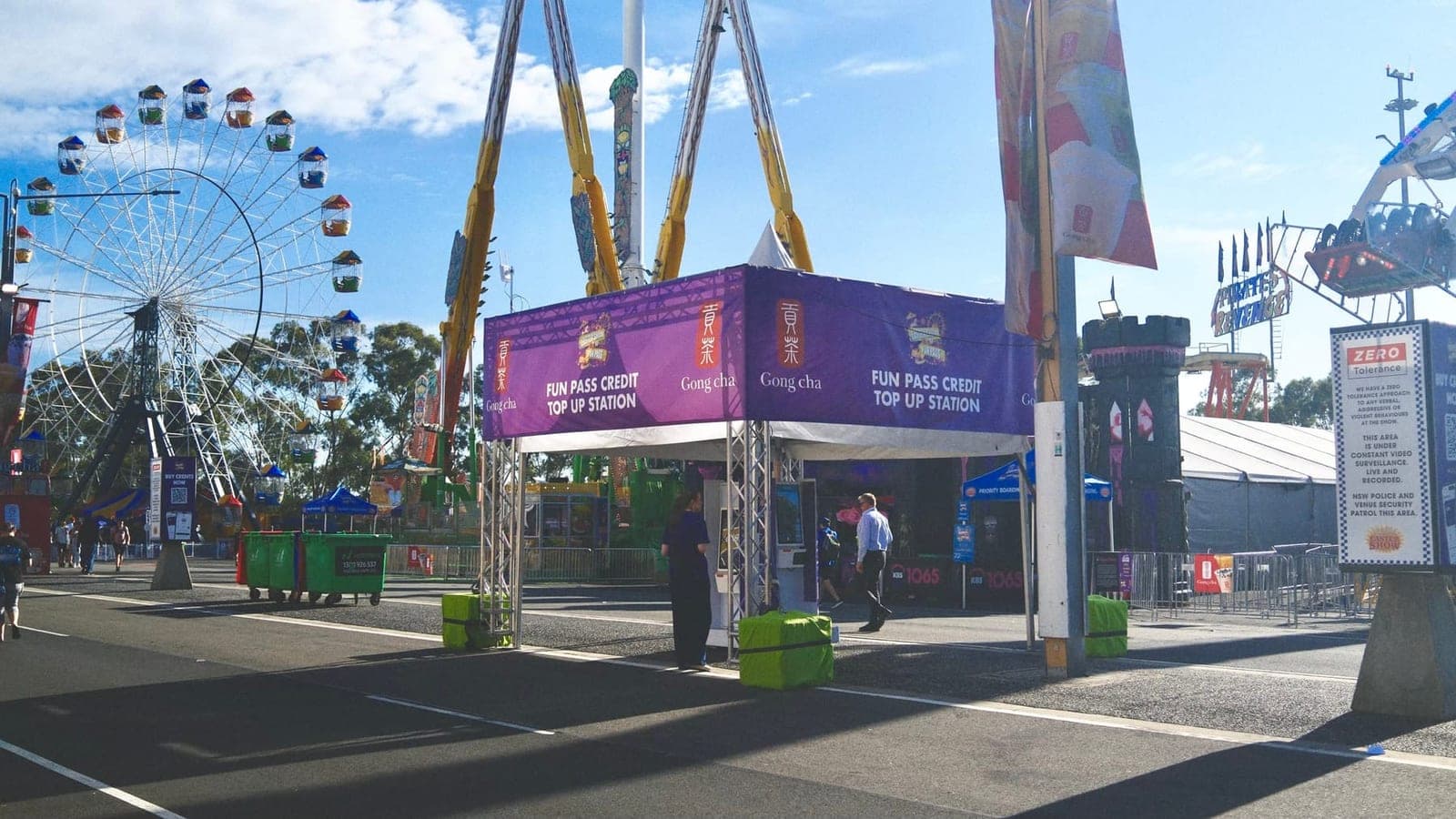
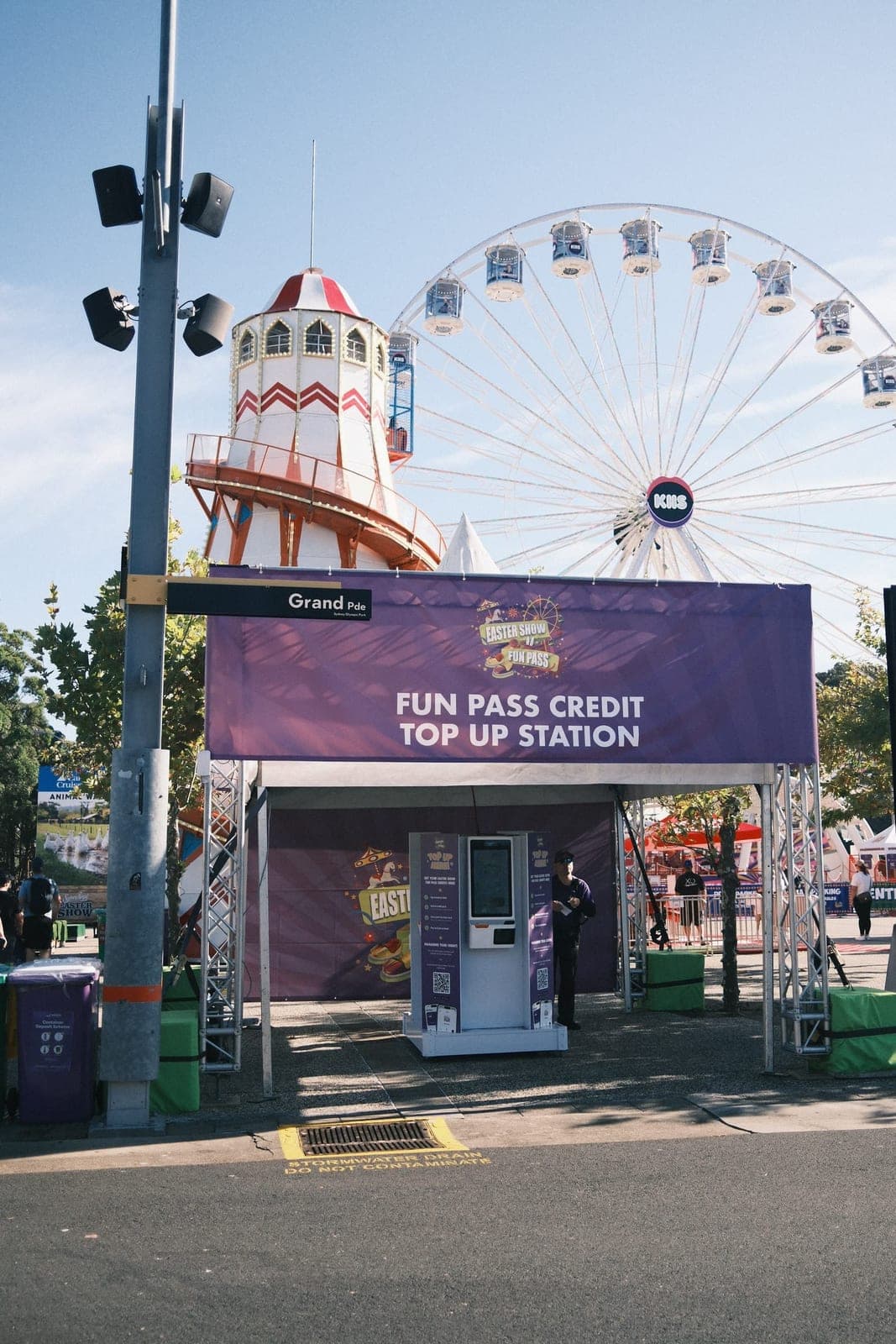
Public top-up stations gave visitors a clear place to update Fun Pass credit without interrupting support teams. The station at Grand Parade made the system visible without making it feel technical.
04 / Vendors
Payments stayed simple at the counter.
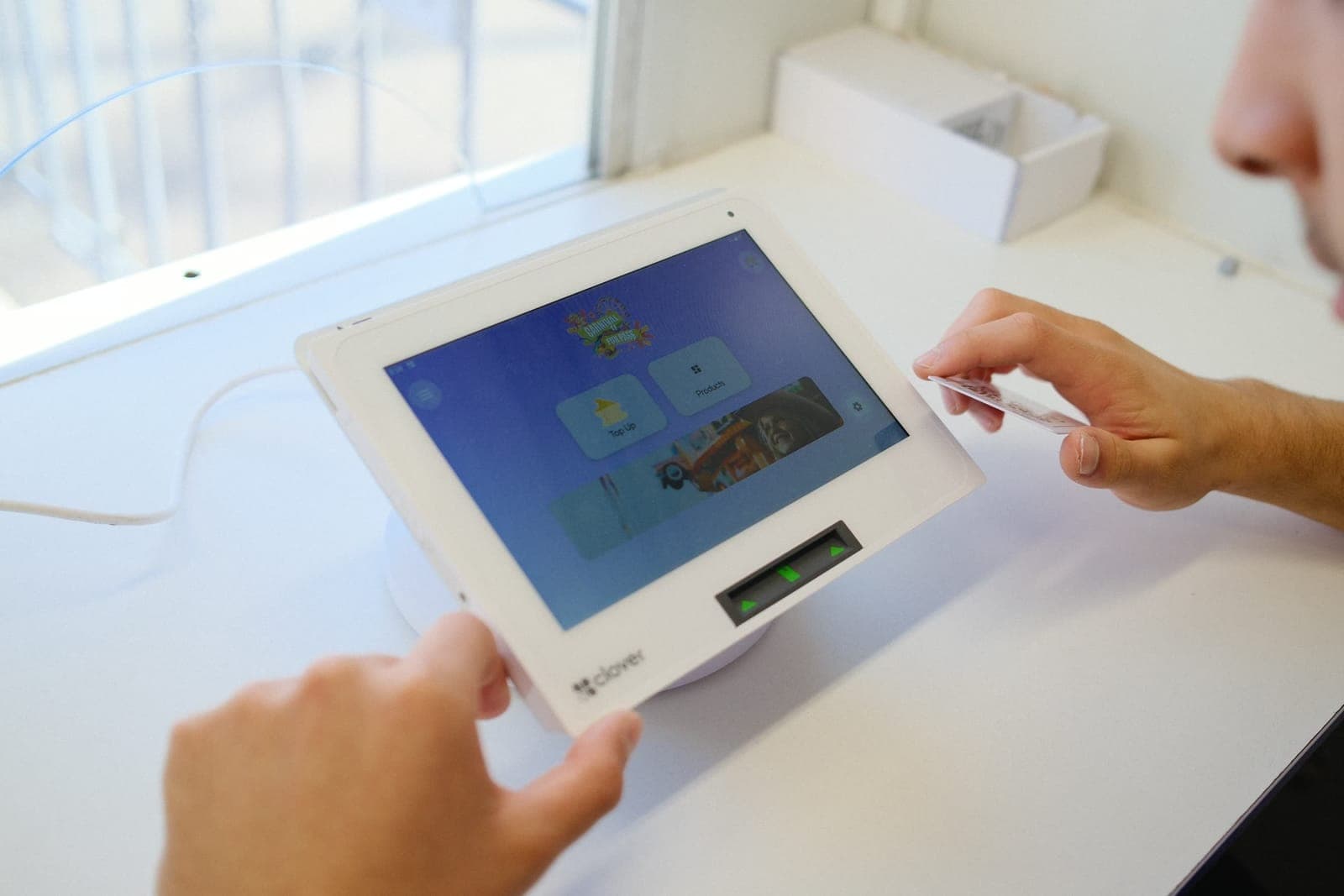
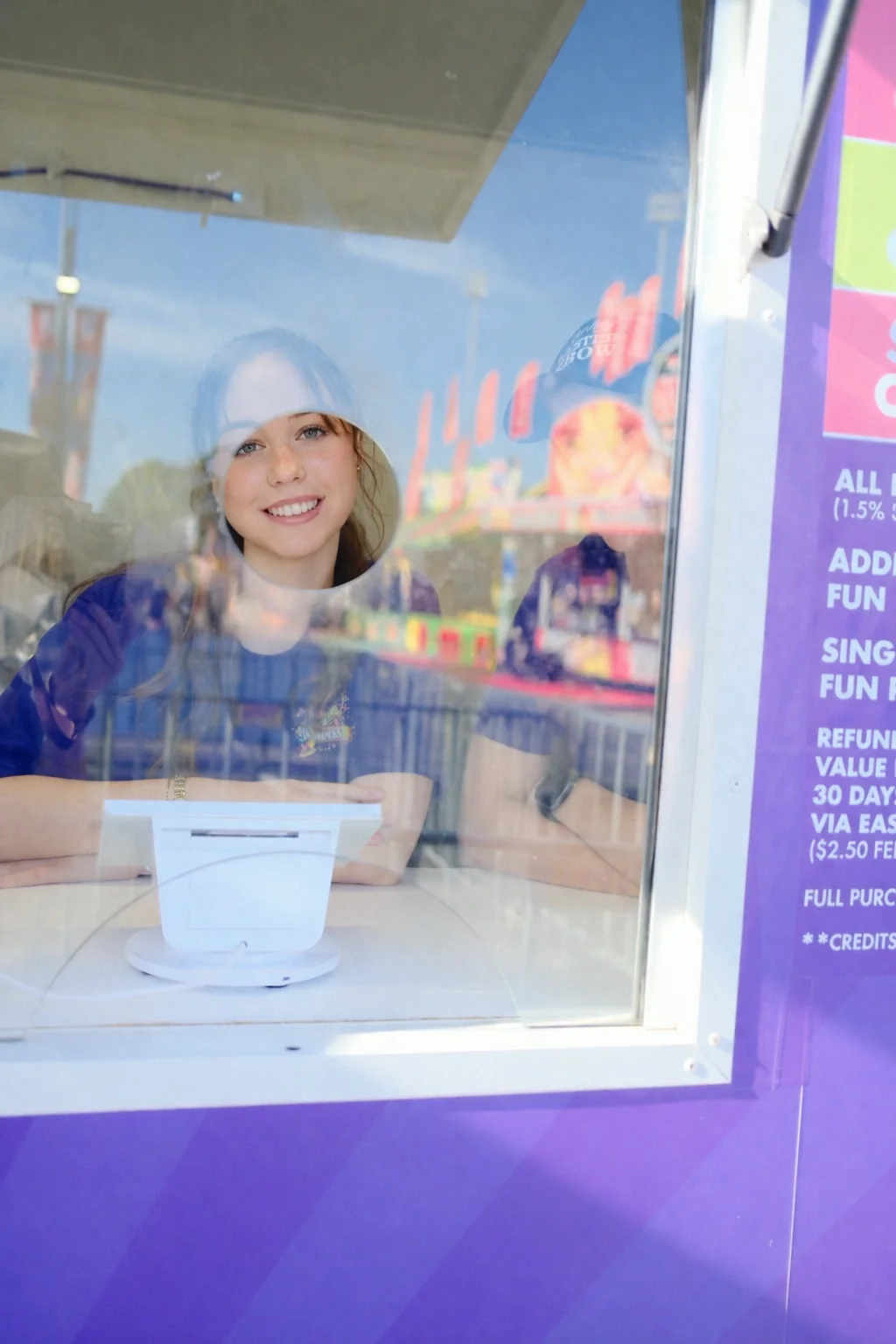
Clover Mini terminals gave vendors a familiar, fast surface for top-ups and transactions. Ludo handled the event wallet, access, and settlement logic behind the scenes, so seasonal staff did not need to learn a complicated new stack.
05 / Wayfinding
The visitor app became a live guide.
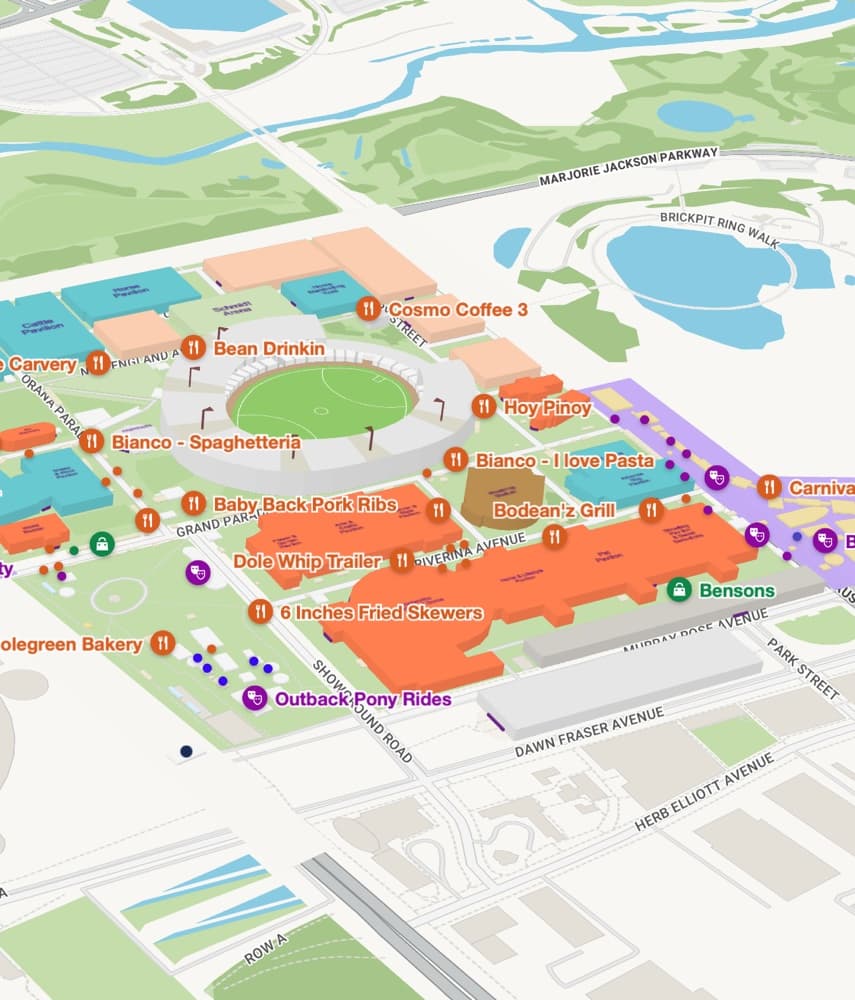
Venue maps lived inside the Easter Show visitor app, helping visitors find exhibitors, food, rides, amenities, and facilities across the showground. The interactive map was powered by Mappedin and surfaced inside the same app visitors used for show-day convenience.

Implementation partner
400,000+
map sessions
5+ years
of map minutes in two weeks
06 / Hard result
The show kept moving because the rails stayed connected.
The outcome was not a flashier payment screen. It was operational calm: visitors had more ways to self-serve, vendors had clearer totals, and the venue had a live view across the moving parts.
“We needed to elevate our visitor experience, and we found a partner capable of delivering everything we envisioned on a digital platform.”

Shane McGrath
Head of Operations, Sydney Royal Easter Show
“If we do our job right, visitors barely notice the tech. They just have a better day.”

Bart Wildash
Founder & CEO